
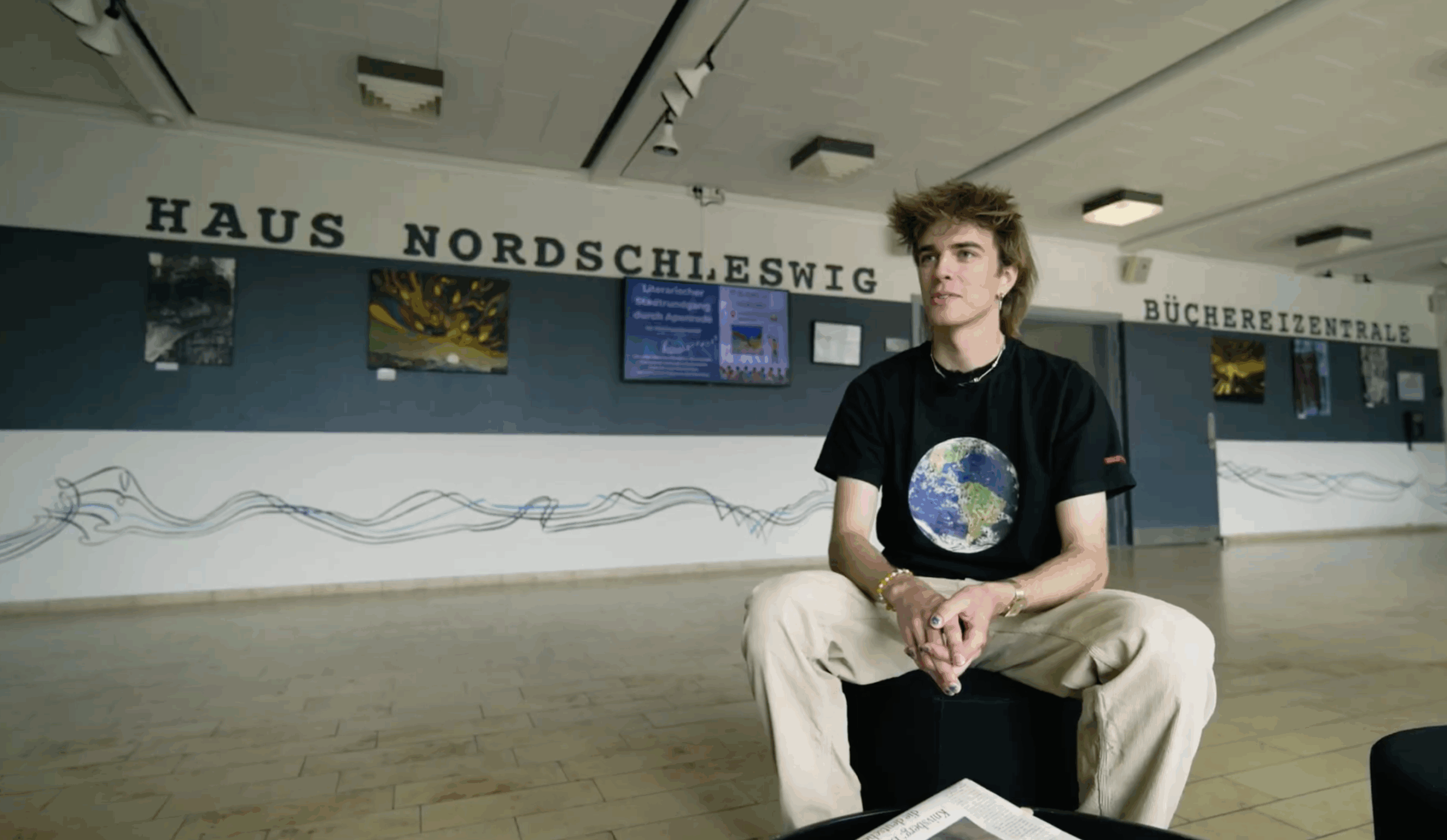
Leif from Gravenstein (Gråsten) has been part of the German minority in North Schleswig for twelve years. He has found his own place between German and Danish culture - as a young, committed North Schleswig resident who builds bridges.
Between Germany and Denmark
For Leif, life as a North Schleswig resident means going to minority schools and getting involved in the institutions. „For me, the minority is a kind of refuge for my idea of identity, because I don't see myself as completely German or completely Danish.“
For a long time, he thought you had to make a decision. „But you don't have to, because I'm part of the minority. I can always say: I am North Schleswig.“
The heart of the minority: Haus Nordschleswig
We are located in the North Schleswig House in Apenrade (Aabenraa) - the administrative center of the German minority. In the house is the BDN with its associated organizations, e.g. the DSSV, which SP and many other institutions. This structure links schools, cultural work and politics.
Leif's everyday life is bilingual. He usually speaks German with friends and at school, and Danish outside of school. Not a contradiction for him, but normality. Once a year, the entire minority meets on Knivsberg: sport, culture, exchange - a festival that makes cohesion tangible.
Leif is also politically active. He is a candidate for the Schleswig Party, which represents the interests of the German minority in the municipalities of Sonderburg (Sønderborg), Apenrade (Aabenraa), Hadersleben (Haderslev) and Tondern (Tønder) - and even has a mayor in Tondern.
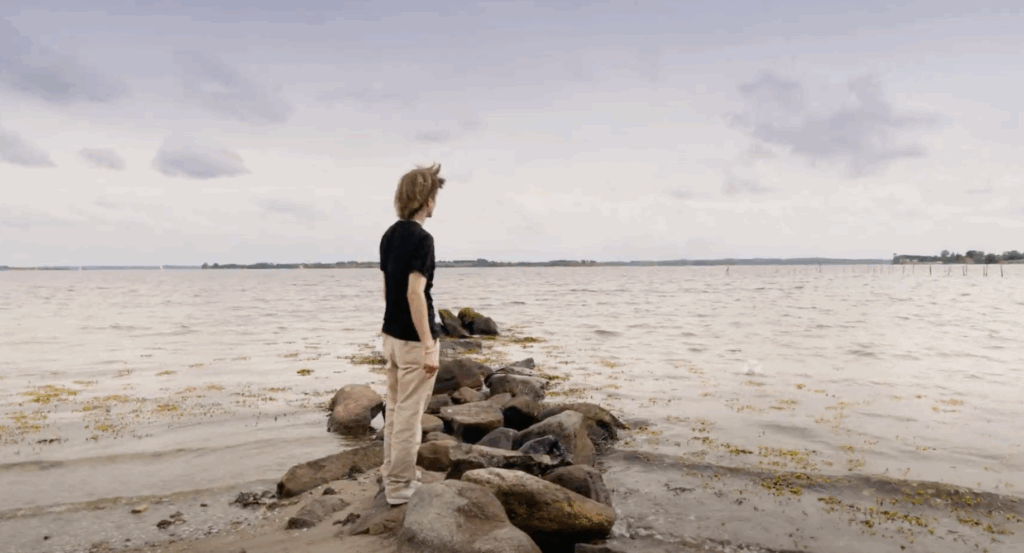
Sometimes, says Leif, the world seems bleak. „But if you look at the short term, the situation is actually quite good“. He hopes that people will listen to each other better, stick together and find solutions together. And that the German minority remains what it is: strong, vibrant and supported by both sides of the border.
 Deutsch
  Dansk
Dansk  English